
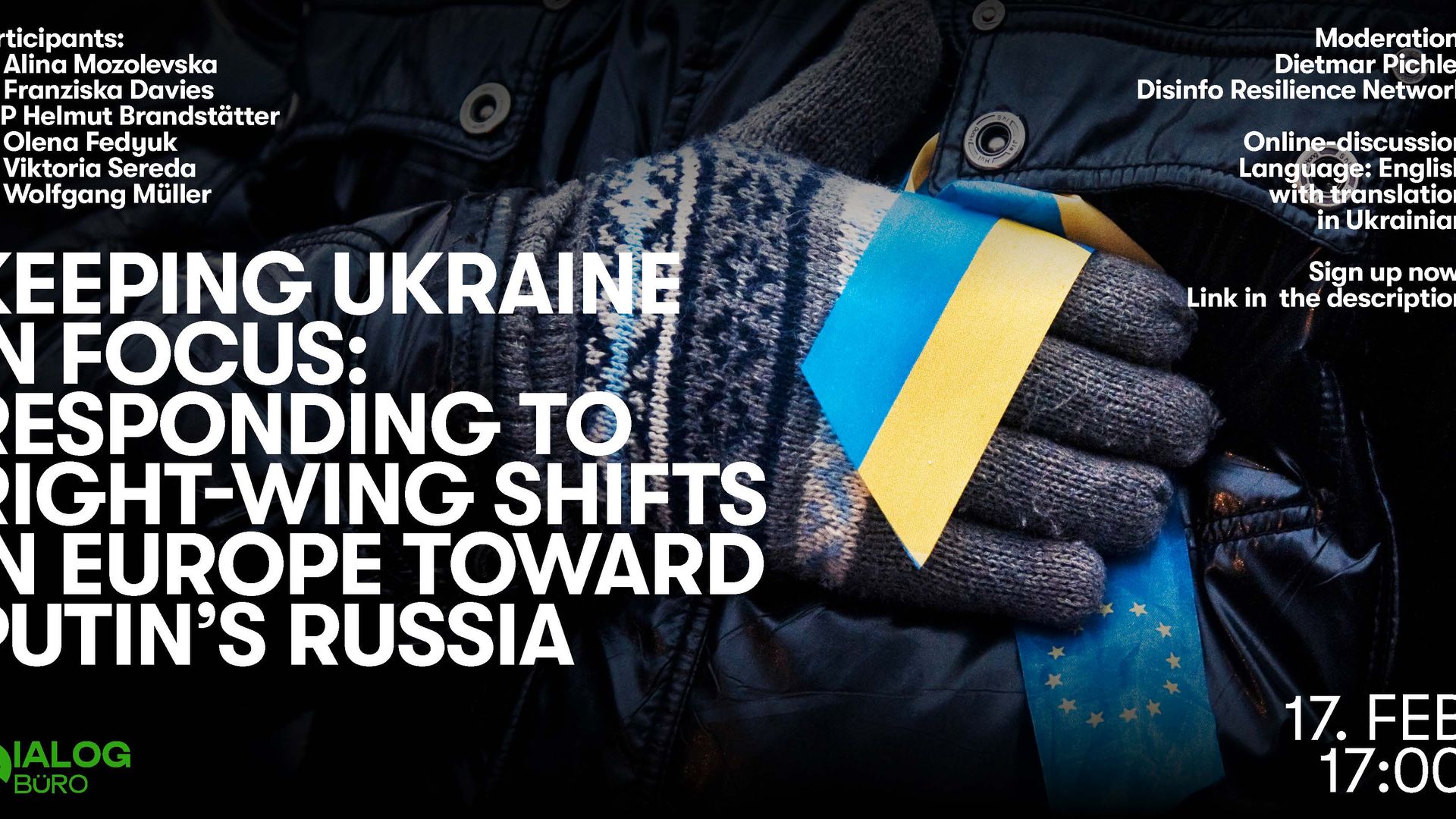
Keeping Ukraine in focus: Responding to right-wing shifts in Europe toward Putin's Russia
We would like to invite you to an online discussion "Keeping Ukraine in focus: Responding to right-wing shifts in Europe toward Putin's Russia".
Register to the event17 February 2025
The full-scale war in Ukraine has been going on for almost three years. Since the first Russian missiles started bombing residential buildings, Ukraine has gotten lots of support within Europe in fighting against Russia. A large wave of refugees escaped to different European countries. The EU and most European national governments stood with Ukraine and expressed solidarity and support for the Ukrainians. Ukraine perceived itself as a European frontier destined to stop Russian imperialism and save Europe and European democratic principles. Since the Revolution of dignity, 2013-2014, Ukrainians have sacrificed their lives to be part of the European community, believing in the highest value of human life.
However, even during the first years of the war, Ukrainians had to fight for Europeans to acknowledge their subjectivity, and this situation has even worsened over time.
The right-wing rise to power in several European countries changed the discourse and threatened the consensus of support for Ukraine. The position of standing with Ukraine until the end has gradually turned into a demand for a talk with Putin.
The antimigrant claims of right-wing European politicians created obstacles for Ukrainian refugees to be accepted in European societies. This discourse aimed to shape the image of Ukrainians as undesired citizens who disregard the goodwill of Europeans. Rather than condemning Russia's aggression against Ukraine and threats to European values of democracy and human rights, right-wing populist politicians are increasingly taking Putin's side and portraying Russia as a superpower worth negotiating with.
How will the increased popularity of the right-wing radicals within Europe influence Ukraine’s position in the war? How does Europe relate to this war in Ukraine now? What can European politicians do to help Ukraine in its struggle for sovereignty and democratic freedoms?
Participants
ModeratorDietmar Pichler, Disinfo Resilience Network
Sperakers
• Dr. Alina Mozolevska, Petro Mohyla Black Sea National University, Mykolaiv
• Dr. Franziska Davies, Deutsch-Ukrainischen Gesellschaft, LMU Munich
• MEP Helmut Brandstaetter, Neos, European Parliament
• Dr. Olena Fedyuk , Central European University
• Dr. Viktoria Sereda, Ukrainian Catholic University, Lviv
• Dr. Wolfgang Mueller, University of Vienna
Speakers