
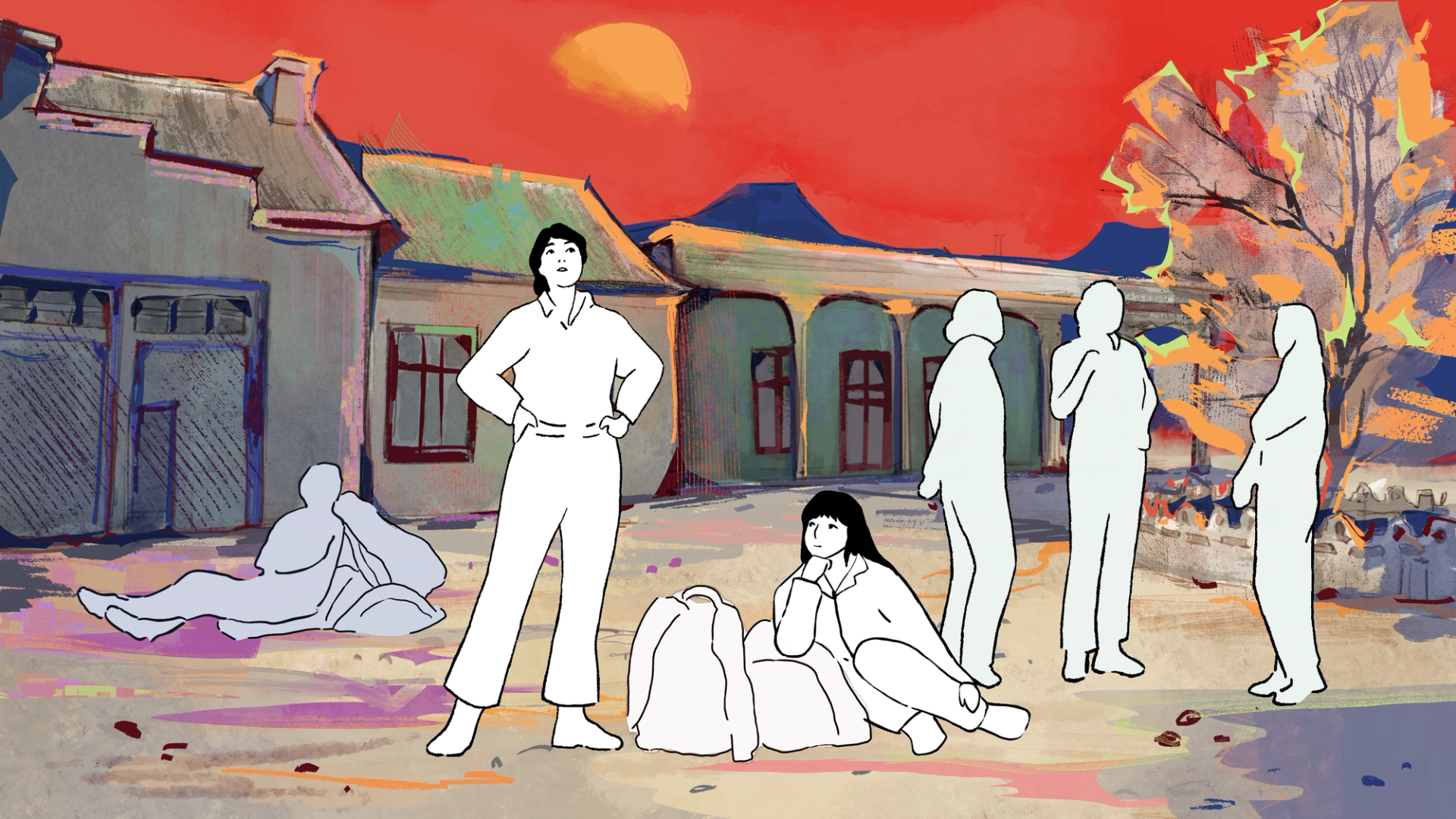
"My Grandmother Is a Skydiver". Language, Memory & Decolonization
Polina Piddubna’s animated documentary “My grandmother is a skydiver”, premiered at Festival de Cannes, and the works created by the animation workshop participants.
Register to the event10 March 2026
My grandmother plants Tulips in the garden while our hometown Kharkiv is constantly being bombed. She is complaining that the bees don't pollinate her flowers, so there will be no fruits in summer.
In 1960s Tajikistan, a skydiver gets a call from her granddaughter in 2022 Ukraine, sparking an intergenerational journey through trauma, memory and identity.
Join us to see Polina Piddubna’s animated documentary “My grandmother is a skydiver”, premiered at Festival de Cannes, and the works created by the animation workshop participants.THE STORY
Alfyia, a joyful young woman in 1960s Central Asia, is actively parachuting and studying to become a midwife, when she receives an extraordinary phone call from her granddaughter in 2022. She is worried about her grandmother's safety amid the invasion of Ukraine. In this intergenerational conversation across time and space, the granddaughter tries to restore and rethink family memory and her own ethnic identity, break the endless cycle of collective trauma and reflect on the meaning of human life.
"My Grandmother is a Skydiver" is a poetic animated documentary that journeys through time, geography, generations, and cultures to explore themes of life, the sky, knowledge, loss, and war.
Research for this project began in early 2022, sparked by my interest in my grandmother's life as a young, progressive woman from a Muslim background in Central Asia, as well as the broader development of feminism in the region. After the full-scale Russian invasion, which directly impacted my hometown in eastern Ukraine and my family, the story took on a deeper subtext. The colonial legacy of the aggressor country stretches back centuries, affecting Eastern Europe, the Caucasus, Central, and North Asia. Countless cultures, languages, and ethnic groups have faced and continue to face oppression. These issues remain largely undiscussed; our stories are often overlooked by the international community.
This film serves as a form of media therapy, providing a space for reflection, healing, and resilience for those directly impacted by conflict. It promotes cultural visibility and advocates for ethical approaches to marginalized narratives. It calls for decolonizing perspectives, unlearning biases, and making space for stories long kept on the margins to emerge into global consciousness and solidarity.
In its essence, the film is a political statement conveyed through the personal story of my family.
Polina Piddubna
FILM CREDITS
Author, Director and Producer

Polina Piddubna