
Hidden Risks: Russian Fossil Fuels, Climate, and Europe’s Sanctions Blind Spots
What if sanctions did not end Europe’s entanglement with Russian fossil fuels — but only made it harder to see? The event asks what remains hidden after sanctions, and why it matters for Austria and Europe.
Register to the event31 May 2026
What if sanctions did not end Europe’s entanglement with Russian fossil fuels — but only made it harder to see? GreenThinkTank.life and CEDAR present recent research on Russian oil re-exports to Europe and the hidden costs of Russia’s coal industry, created with the support of Dialogbüro Vienna — from political protection to methane emissions. The event asks what remains hidden after sanctions, and why it matters for Austria and Europe.
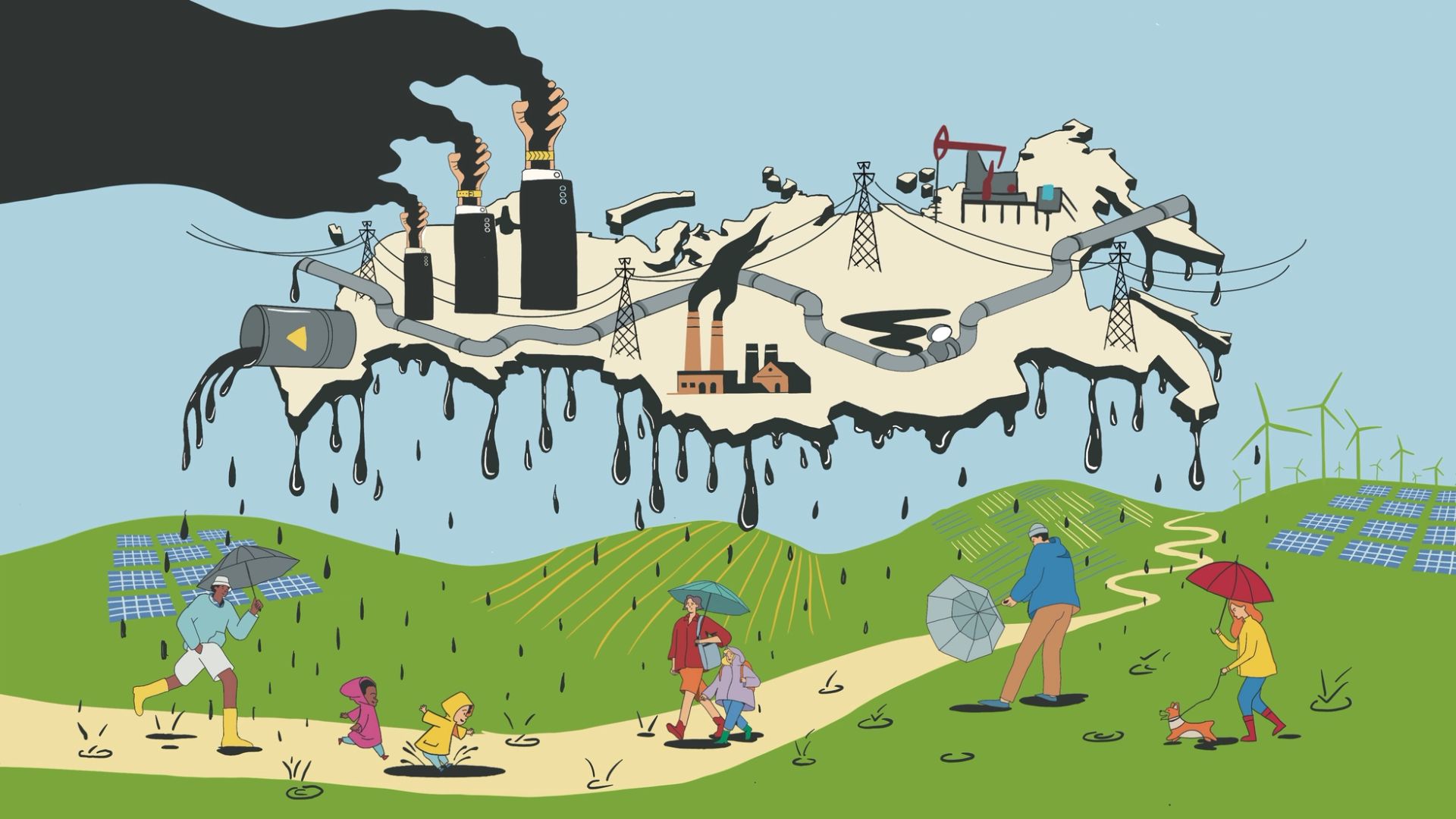
Russian fossil fuels did not disappear from Europe after sanctions. Some of the ties simply became harder to see. Oil continues to return to European markets through refining and re-export in third countries. Methane emissions remain underreported and poorly monitored. And industries presented as economically necessary continue to survive through political protection, hidden subsidies, weak oversight, and the transfer of costs onto people, local communities, and the climate.
Prepared with the support of Dialogbüro Vienna, the event brings together recent research by GreenThinkTank.life, CEDAR, and partner experts on how Russia’s state-captured extractivist subsidy regime drives fossil-fuel dependence, climate harm, and sanctions blind spots in Europe.
The discussion starts from a simple but uncomfortable point: Russian fossil fuels did not simply vanish from Europe after 2022. In the oil sector, part of that connection continued through the refining loophole — Russian crude was redirected to third countries, refined there, and returned to European markets as petroleum products with formally changed origin. The oil report describes Turkey and India as the key hubs of this mechanism.But the problem is larger than oil alone. Our discussion will also address methane emissions, opaque climate reporting, and the hidden costs of Russia’s extractive economy. The new coal report “Russian coal industry 2022 - 2025” shows how the sector survives through political protection, weak environmental oversight, and the transfer of costs onto local communities, and the climate. It also identifies methane from coal extraction as a major undercounted climate risk.
The new coal report “russian coal industry 2022 - 2025” shows how the sector survives through political protection, weak environmental oversight, and the transfer of costs onto local communities, and the climate.
The gas sector adds another layer. The gas report argues that Russia’s gas crisis is no longer only economic, but environmental as well: falling revenues, weakening transparency, pressure for deregulation, and rising methane-related risks are now part of the same picture. Its own policy hooks frame the issue bluntly: falling gas revenues are driving environmental deregulation, and methane leaks are becoming easier to detect even as official transparency declines.The panel will also ask what all this means for Austria. This includes the possible role of Austrian companies still connected to Russia’s energy sector, the climate consequences of such ties, and the broader question of how fossil-fuel revenues continue to sustain Russia’s war economy. EU institutions themselves explicitly frame sanctions as a tool to cut Russian energy revenues and weaken that war economy.This is not only a discussion about Russia. It is a discussion about Europe’s blind spots: what remains hidden behind sanctions, what still escapes public scrutiny, and why climate policy, energy security, and democratic accountability cannot be separated any longer.
Speakers
Anton Lementuev

Co-founder of GreenThinkTank.life; researcher focusing on Russian extractive industries, energy, and environmental risks
Arnold Khachaturov
Director of CEDAR, Head of Data Team at Novaya Gazeta Europe
Artem Kochnev
Climate & Energy Economist, Denkfabrik Initiative